Service hotline:
400-8858-119
Sales hotline:
400-8600-508
Company email:26442***@qq.com
Personal email:26442***@qq.com
Welcome to the official website of Jiangxi Longzheng technology development co., LTD !

Service hotline:
400-8858-119
Sales hotline:
400-8600-508
Company email:26442***@qq.com
Personal email:26442***@qq.com

Longzheng technology development co., LTD──professional fireproof coating manufacturers
Address: no. 2 xiyu road, industrial park, ganzhou economic development zone, jiangxi province
Free hotline:400-8858-119
Cellphone number:15979766999 (Ms Rong)
Telephone:0797-8374201、5556808、5556806
Fax number:0797-5556802
Email:jxlz2008@163.com
Website:http://www.jxlongzheng.com
Bid Farewell to Corrosion Troubles, Embrace a New Era of Durability: Carbon Fiber Composite Photovoltaic Frames Redefine Power Plant Asset Value
Under the grand narrative of the "dual carbon" goals, the photovoltaic industry is expanding globally at an unprecedented pace. From the scorching Gobi deserts to the damp, salt-laden mudflats near coastlines, and even in industrial zones plagued by acid rain, the presence of photovoltaic power stations is ubiquitous. However, as application scenarios become increasingly complex, a long-standing "silent killer" plaguing the industry—corrosion—is gradually emerging, becoming a critical factor affecting power station asset value and electricity generation revenue.
R1: "颜值" must be translated as "appearance value" Traditional metal frames, particularly those made of aluminum alloy, have dominated the market for decades due to their mature craftsmanship and relatively low cost. However, under harsh conditions such as salt spray, acid rain, and high humidity, their limitations have become increasingly apparent. Issues like electrolytic corrosion, oxidation discoloration, and sealing failure... These problems not only affect the "appearance value" of power stations but also directly threaten the electrical safety and long-term reliability of components.
1、 The Achilles' heel of metal frames: corrosion dilemma in harsh environments
The main function of photovoltaic module frames is to protect laminated components, provide mechanical support, facilitate module installation and fixation, and ensure electrical grounding. Under normal conditions, aluminum alloy frames are still capable. However, when the environmental medium changes, the chemical activity of metal materials becomes their fatal weakness.
1. Coastal and nearshore areas: The marine environment in the severely affected areas of salt spray corrosion is the "touchstone" for photovoltaic modules. The large amount of salt spray particles carried by sea breeze adhere to the surface of the components, forming a highly conductive electrolytic liquid film. Aluminum alloy frames are highly susceptible to electrochemical corrosion (pitting or crevice corrosion) in this environment. As time goes by, the oxide film on the surface of the frame is damaged, and the base metal gradually dissolves. This not only causes the frame to become thinner and its strength to decrease, but more seriously, the expansion of corrosion products can also damage the sealing glue (silicone or polyurethane) at the edges of the component, leading to water vapor infiltration and triggering the PID effect (potential induced decay) of the power pool plate or even internal short circuits.
2. Industrial and chemical zones: The continuous erosion of acidic and alkaline media in areas with a high degree of industrialization cannot be ignored, and the problem of acid rain cannot be ignored. Strong acidic substances such as sulfuric acid and nitric acid in acid rain will directly react with the aluminum oxide protective layer on the surface of aluminum alloys, damaging their passivation properties. In addition, corrosive gases such as chlorine and ammonia that may exist in the air around chemical plants can accelerate the chemical corrosion process of metals. This sustained chemical attack can cause the surface of the metal frame to become rough and lose its luster, thereby reducing the reflectivity of the component and even causing frame perforation.
3. Agriculture and Fishery Photovoltaic Complementary Project: Dual Challenges of High Humidity and Chemical Reagents In the Fishery Photovoltaic Complementary Project, the high humidity environment caused by water evaporation provides a breeding ground for corrosion. Meanwhile, chemical reagents such as disinfectants and algae removers used in aquaculture may adhere to components with water mist, creating a complex corrosive environment. Traditional metal frames often have a significantly reduced lifespan in a complex environment with high humidity, salt content, and chemical reagents.
4. Saline alkali land and high-altitude areas: The test of special climate is that the salt in saline alkali soil rises to the surface through capillary action and adheres to components through dust; Intense ultraviolet radiation in high-altitude areas can accelerate the aging of the surface coating of the frame, leading to substrate corrosion. In these special scenarios, the maintenance cost of metal frames is extremely high and difficult to cure.
2、 The way to break through: the 'anti-corrosion gene' of carbon fiber composite materials
Faced with the various pain points of metal frames in harsh environments, the industry urgently needs a new material solution. Carbon fiber composite materials, as a high-performance structural material, are becoming a disruptive force in the field of photovoltaic frames due to their unique physical and chemical properties.
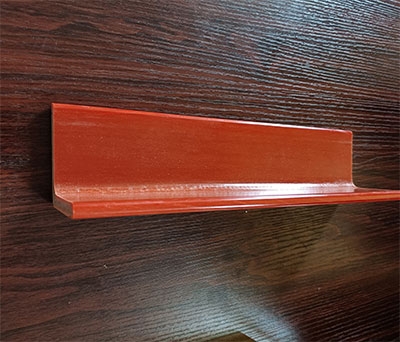
Carbon fiber composite photovoltaic frame, reinforced with high-performance carbon fiber (CF) and modified resin (such as epoxy resin, vinyl ester resin, etc.) as the matrix, is made through advanced composite processes such as extrusion, winding, or injection molding. This material combination gives the frame the following core advantages:
1. Natural super corrosion resistance. Carbon fiber itself has extremely high chemical inertness, while the resin matrix provides a dense protective barrier. This composite structure gives the frame the ability to resist corrosion at the molecular level.
Non rusting and non oxidizing: Carbon fiber composite materials do not contain metallic elements, fundamentally eliminating the possibility of oxidation and rusting.
Resistance to electrolysis, acid and alkali: Whether in salt spray, acid rain or alkaline environments, carbon fiber composite materials exhibit excellent stability. Experimental data shows that after soaking in 5% NaCl solution and 5% H2SO4 solution for thousands of hours, the mechanical performance retention rate is still over 90%.
No risk of electrochemical corrosion: As the material itself is a non-metallic insulator, it will not form a primary battery in a humid environment, completely eliminating the hidden danger of electrochemical corrosion.
2. Excellent weather resistance and long service life. The lifespan of traditional aluminum alloy frames is usually designed to be 25 years, but it is often difficult to achieve in harsh environments. Carbon fiber composite materials have excellent resistance to ultraviolet aging, and the resin matrix, after special modification, can effectively resist the degradation effect of ultraviolet radiation. Its design life can generally reach more than 30 years, even synchronized with the full life cycle of the power station (30-35 years), truly achieving "one-time installation, long-term worry free".
3. A perfect balance between lightweight and high-strength. The density of carbon fiber is only 1/4 of steel and 1/2 of aluminum alloy, but its tensile strength is several times that of steel. This enables carbon fiber composite frames to achieve lightweight while still providing excellent mechanical support strength. Lightweight design not only reduces the overall weight of components and reduces the load on the support system, but also facilitates transportation and installation, reducing labor costs.
4. Insulation safety and PID suppression metal frames are usually grounded, but in some cases (such as poor grounding or uneven potential distribution), high voltage between the frame and the battery cell can cause PID effect, resulting in a significant decrease in power generation. The insulation properties of carbon fiber composite frame fundamentally cut off the leakage path between the frame and the battery cell, effectively suppressing the PID effect and ensuring the power generation performance of the component.
3、 Full lifecycle perspective: Economic and value reconstruction of carbon fiber frame
Today, as the photovoltaic industry enters the era of "de subsidy" and pursues the lowest cost per kilowatt hour (LCOE), simply comparing initial procurement costs is no longer decisive. Total Cost of Ownership (TCO) has become a core indicator for measuring the value of photovoltaic assets. Carbon fiber composite photovoltaic frames exhibit significant advantages in this dimension.
1. Reduce operation and maintenance costs. Traditional metal frames have extremely high maintenance costs in corrosive environments. Regular inspections, rust removal, paint repair, and even replacement of damaged components not only consume a lot of manpower and material resources, but also result in a loss of power generation. The maintenance free feature of carbon fiber frame means that no additional anti-corrosion maintenance costs need to be invested during the 30-year operation of the power station, significantly reducing operating expenses.
2. Reduce replacement costs. When the metal frame is severely corroded, it is often necessary to replace the components in advance, which not only involves the cost of the components themselves, but also includes disassembly, installation, transportation, and power generation revenue losses caused by downtime. The ultra long lifespan of carbon fiber frames ensures that components do not need to be replaced due to frame corrosion throughout their entire lifecycle, protecting the asset integrity of the power plant.
3. Improve power generation revenue. Due to the effective suppression of PID effect by carbon fiber frame, and its high surface smoothness and resistance to dust accumulation (or easy cleaning), it helps maintain the high power generation efficiency of the components. In addition, its lightweight characteristics allow for a more compact bracket design, increasing the installed capacity per unit area, thereby enhancing overall power generation revenue.
4、 Adapting to All Scenarios: Application Prospects from "Border" to "Mainstream"
The corrosion resistance advantage of carbon fiber composite photovoltaic frames makes them irreplaceable in specific scenarios, and also lays the foundation for their popularization in conventional scenarios.
Coastal mudflat and island power stations: this is the "main battlefield" of carbon fiber frame. In a salt spray environment, its corrosion resistance is the key to ensuring the long-term stable operation of the power station.
Chemical industrial parks and industrial plant roofs: Faced with complex industrial waste gas and acid rain, carbon fiber frames can ensure that components remain in good condition in harsh industrial environments.
Fishery light complementary and agricultural light complementary projects: In environments with high humidity, high salt, and chemical reagents, the insulation and corrosion resistance characteristics of carbon fiber frames provide dual protection for the project.
Distributed and BIPV (Building Integrated Photovoltaics): In building roofs or curtain wall applications, the aesthetics and safety of components are crucial. The carbon fiber frame not only has a stylish appearance, but also provides insulation safety, avoiding the potential risk of electrical leakage caused by metal frames and enhancing the overall safety of the building.
5、 Conclusion: Make photovoltaic power plants fearless of corrosion and achieve long-term stability and victory
Photovoltaic power plants are asset investments that have lasted for decades, and their value is not only reflected in the initial installed capacity, but also in the long-term stable power generation capacity. Corrosion, as a 'hidden killer' that affects the lifespan of power plants, must be given sufficient attention. Carbon fiber composite photovoltaic frame provides a new solution for the photovoltaic industry with its inherent super corrosion resistance, long service life, and excellent comprehensive performance.
Choosing carbon fiber composite photovoltaic frames is not only about choosing a material, but also about choosing a way to safeguard the long-term value of power plant assets. It enables photovoltaic power plants to withstand the erosion of harsh environments such as salt spray, acid rain, and high humidity, achieving sustained and stable wins with lower operation and maintenance costs and higher power generation profits. In the new journey towards high-quality development of the photovoltaic industry, carbon fiber composite photovoltaic frames will play an increasingly important role, reshaping the asset value of photovoltaic power plants and helping the global clean energy industry to achieve stability and long-term success.
 Online Service